
Types of Trails We Build
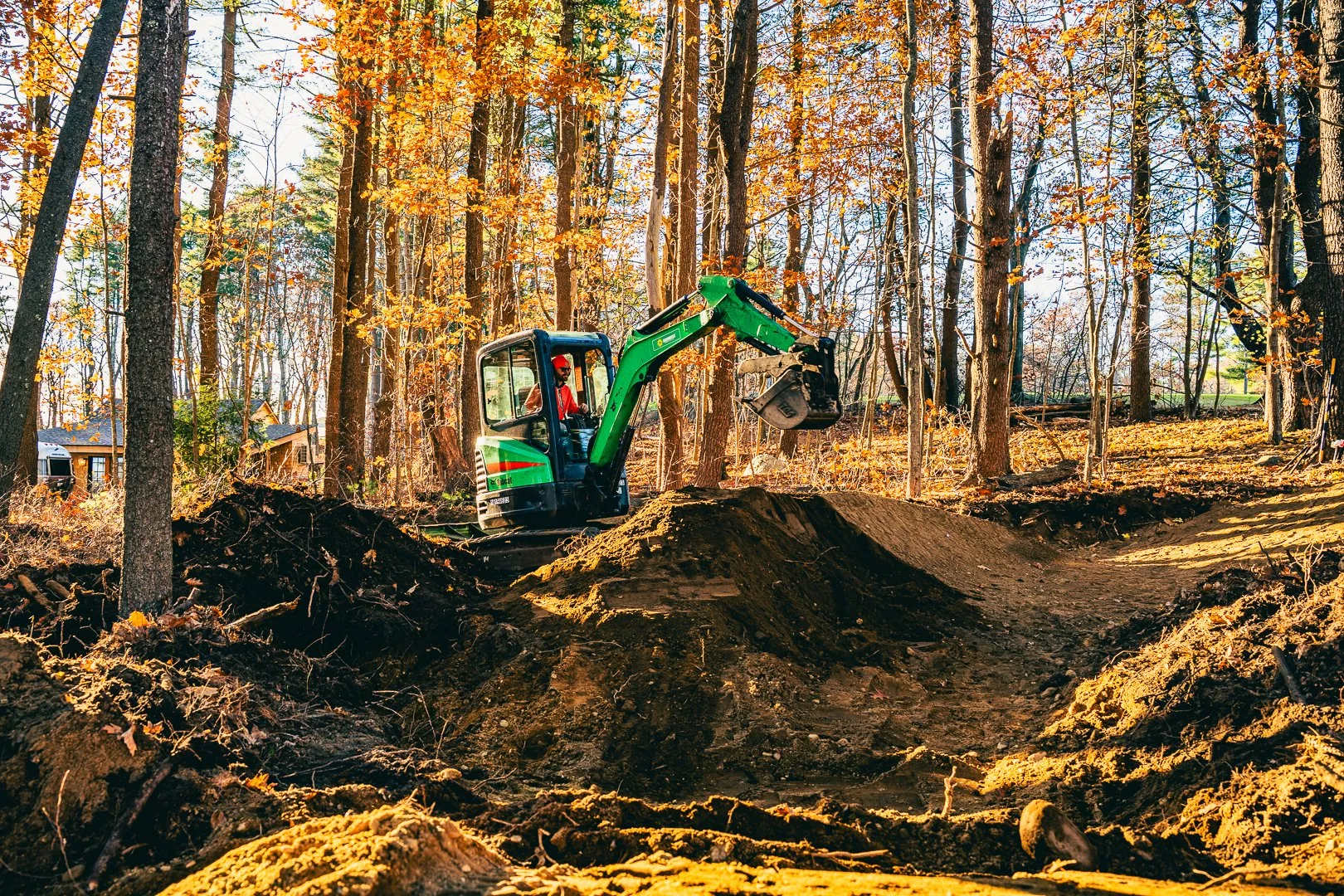
Custom hiking and mountain bike trail construction for landowners, municipalities, and organizations across Maine.
Mountain Bike Trails

Maine Trail Builders designs and constructs mountain bike trails built to last, from beginner-friendly flow trails to technical gravity descents.
Whether the goal is a community pump track or a full trail system, the approach is the same: thoughtful design, quality construction, and trails that hold up over time. Maine Trail Builders works across the full range of trail types and construction methods to match each build to its landscape, its riders, and its long-term purpose.
Trail Types + Use
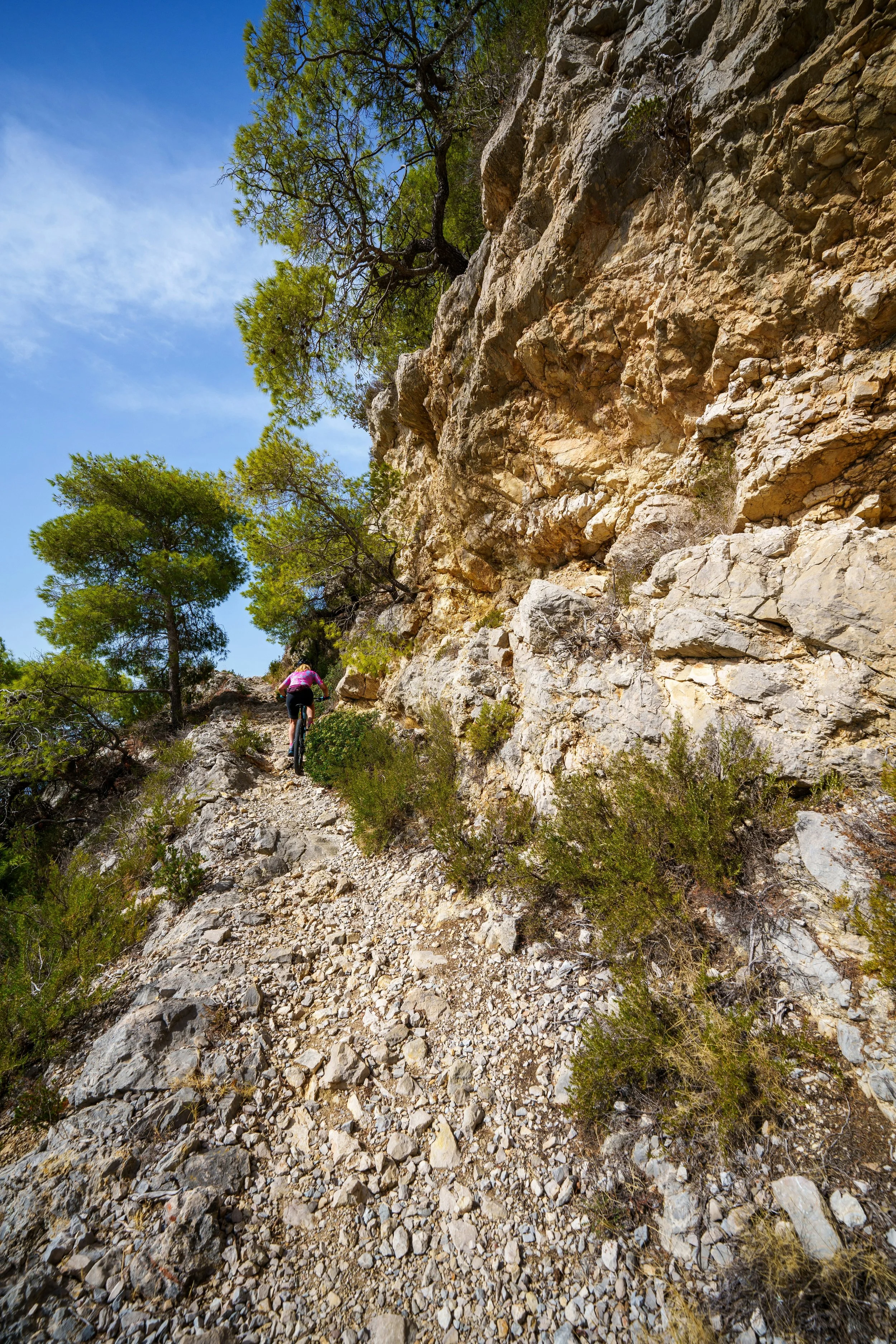
Cross-country trails are designed for pedaling efficiency across varied terrain, typically featuring climbs, descents, and rolling sections in a continuous loop. They are a good fit for riders focused on fitness and endurance, and for trail systems that want to serve a broad range of skill levels.
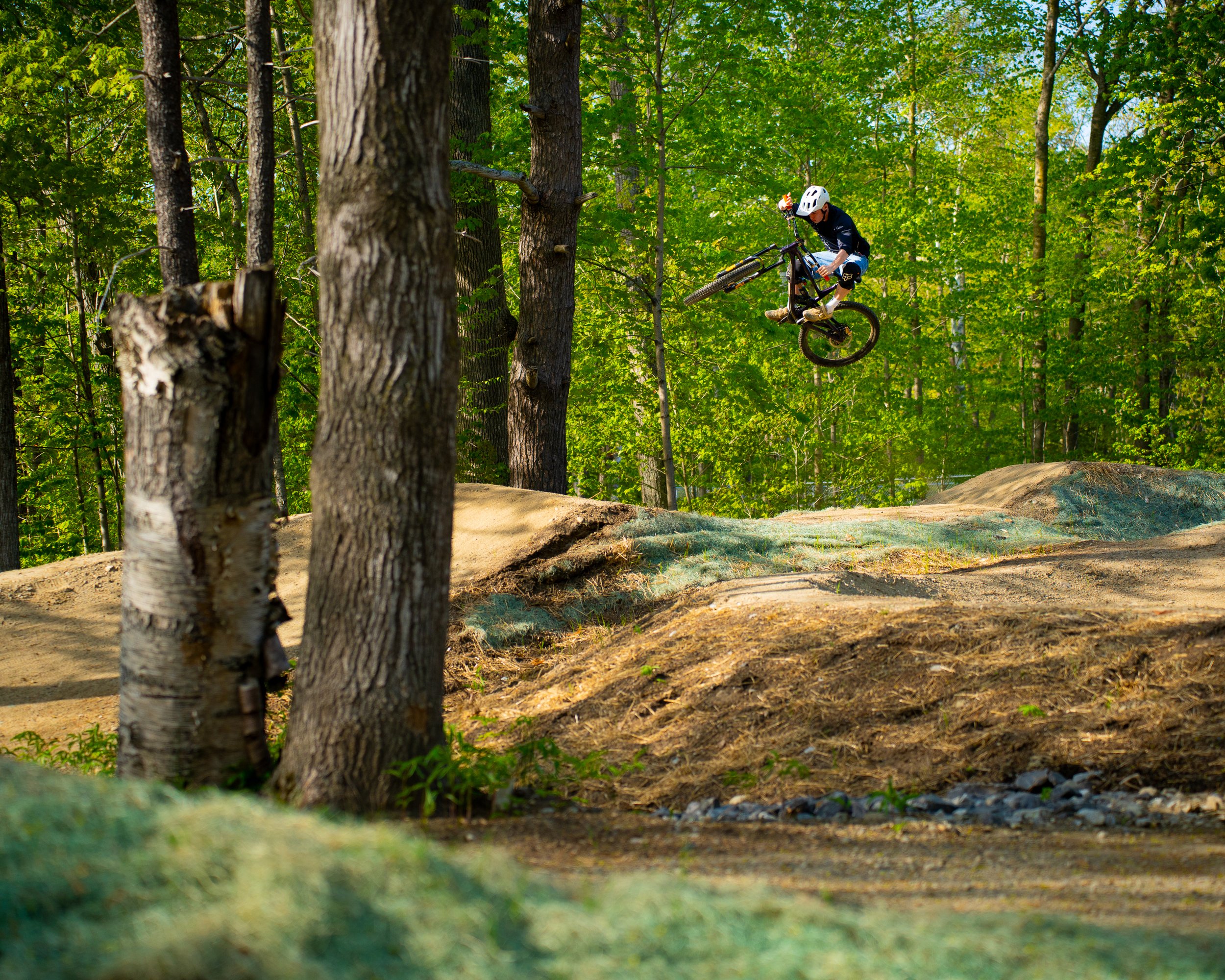
Gravity trails are jump-oriented downhill trails built around features like tabletops, doubles, and gap jumps. They are best suited for locations with significant elevation change and riders looking for fast, technical descents with airtime.
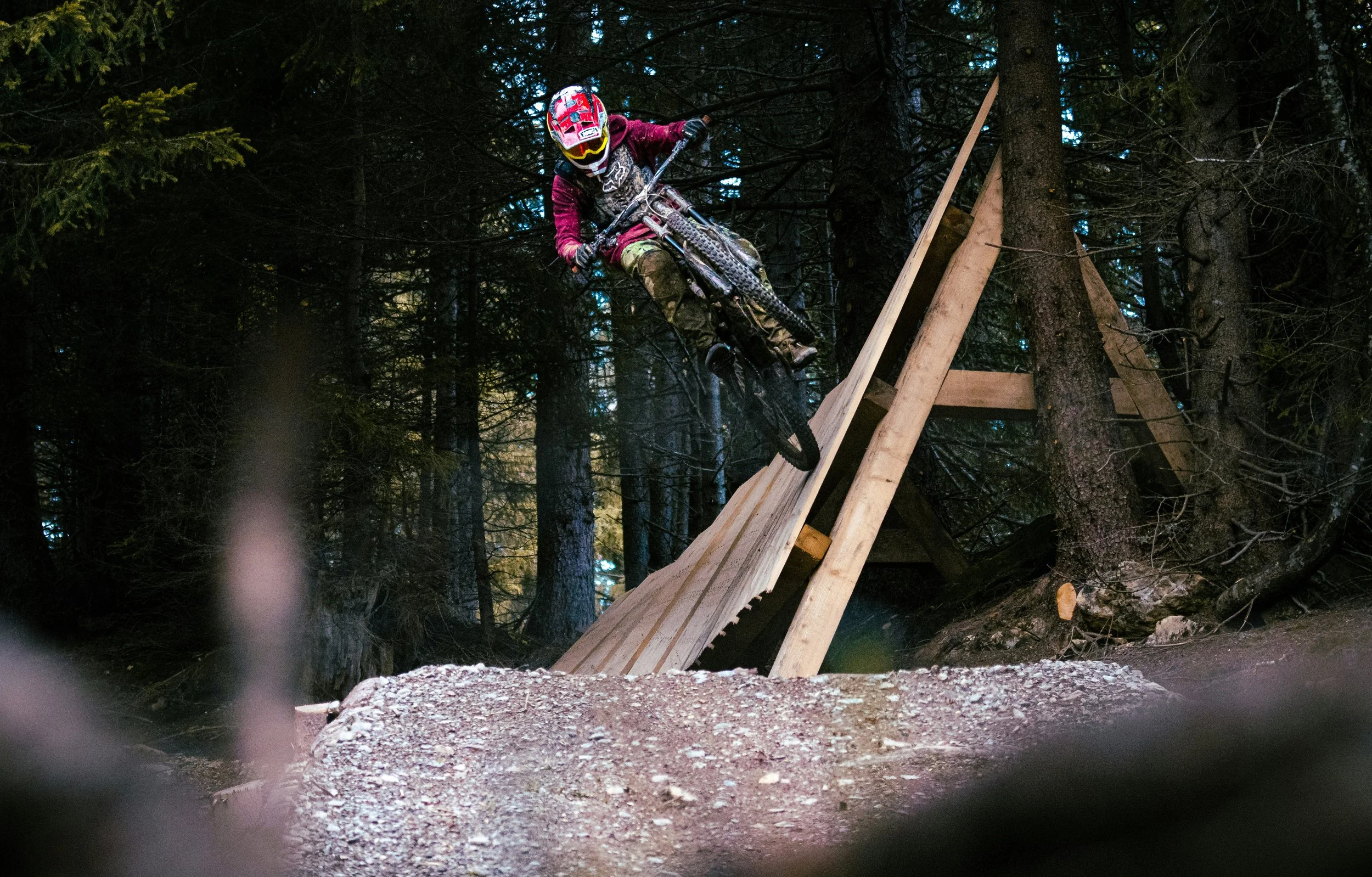
Bike parks are purpose-built facilities that cluster a variety of trail types, features, and skill progressions within a defined area, often with lift or shuttle access. They work well for high-traffic locations looking to serve everyone from beginners to advanced riders in a single destination.
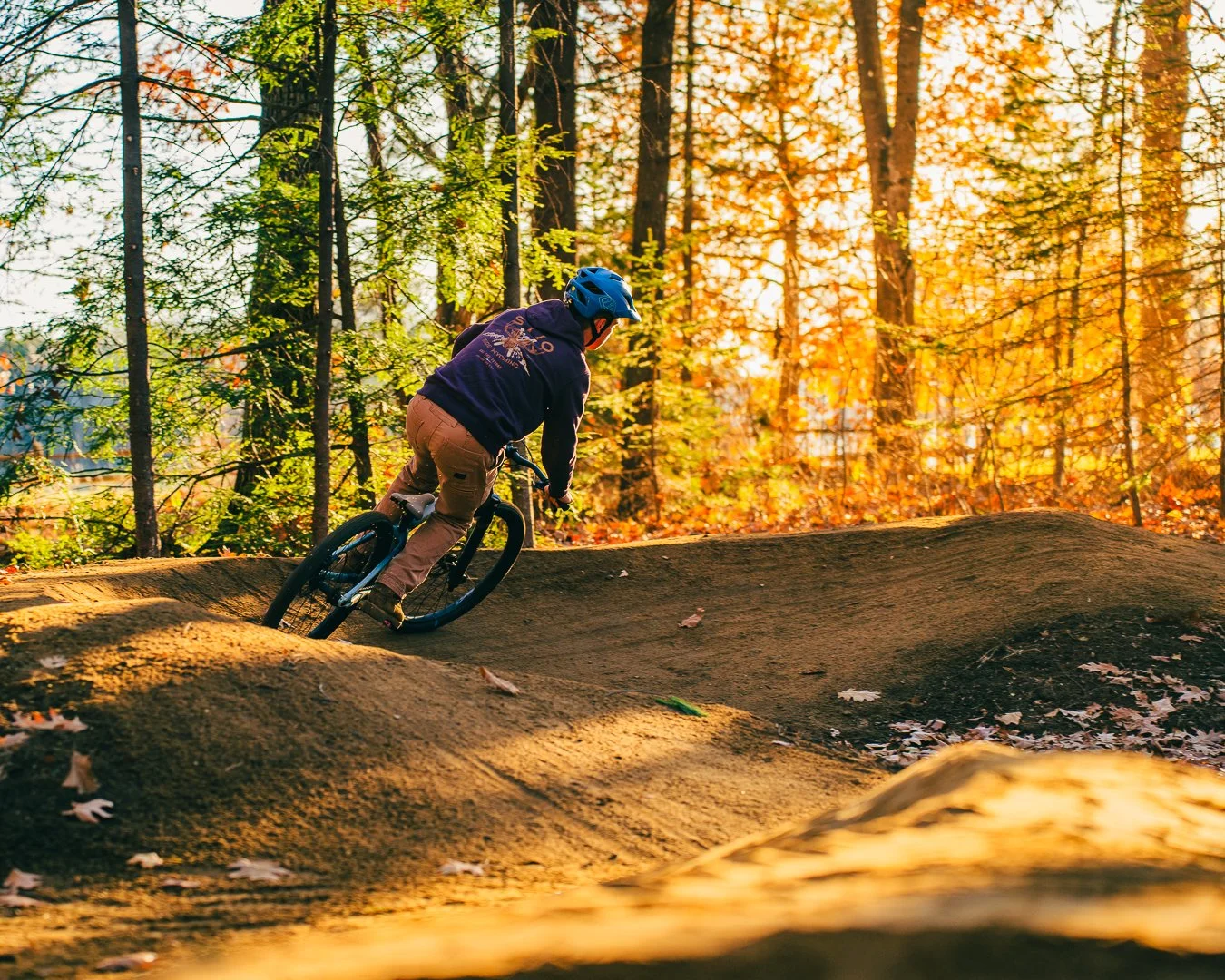
A pump track is a looped circuit of rollers and bermed corners designed to be ridden entirely through body movement, without pedaling. It is a good fit for riders of all ages and skill levels, and serves as an effective progression tool for developing fundamental bike handling skills.
Feature Types
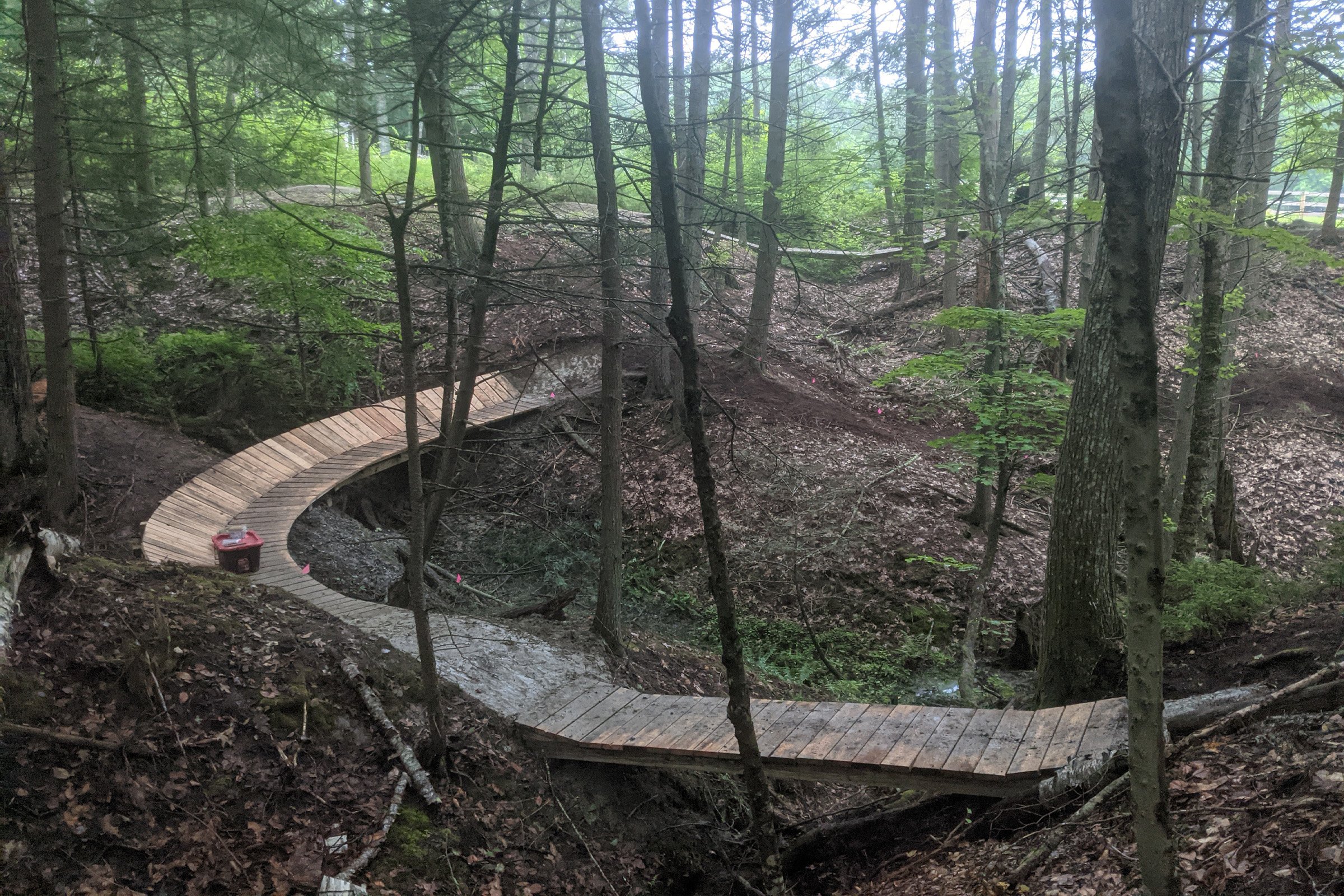
Wood features are trail obstacles and structures built from timber, including bridges, skinnies, teeter-totters, ladders, and elevated platforms. They are a good fit for trail systems that want to add technical challenge or progression opportunities beyond what natural terrain alone can provide.
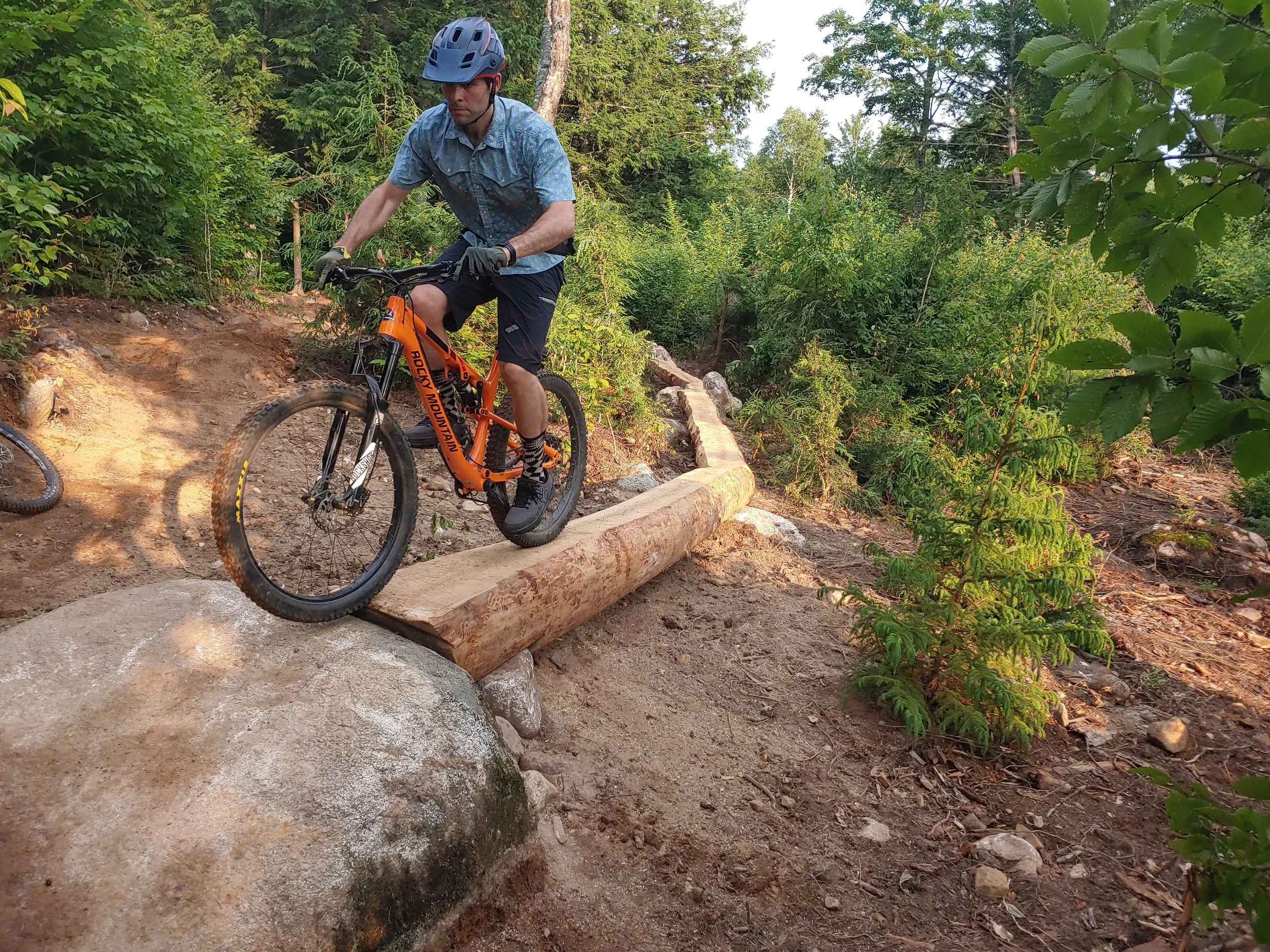
A narrow bridge, commonly called a skinny, is a slim elevated plank or beam that riders must balance across as a technical challenge. It is well suited for skills areas and intermediate-to-advanced trail systems where riders are looking to test and develop their precision and balance.
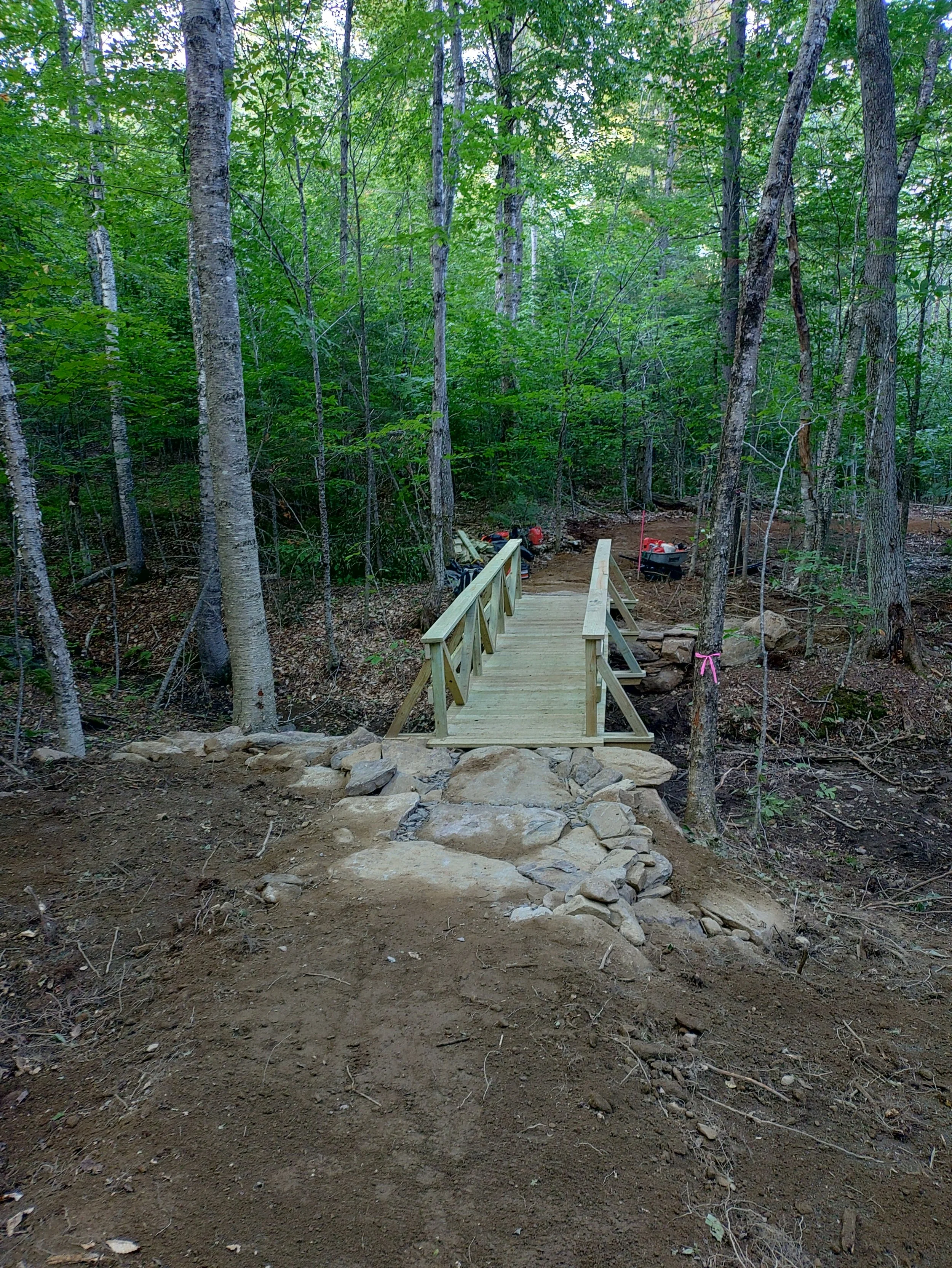
A bridge with railings is a wider elevated structure designed to safely carry trail traffic over obstacles such as streams, roots, or wet ground. It is appropriate for high-use trails, family-oriented systems, and anywhere drainage or terrain requires a crossing that prioritizes safety and accessibility.
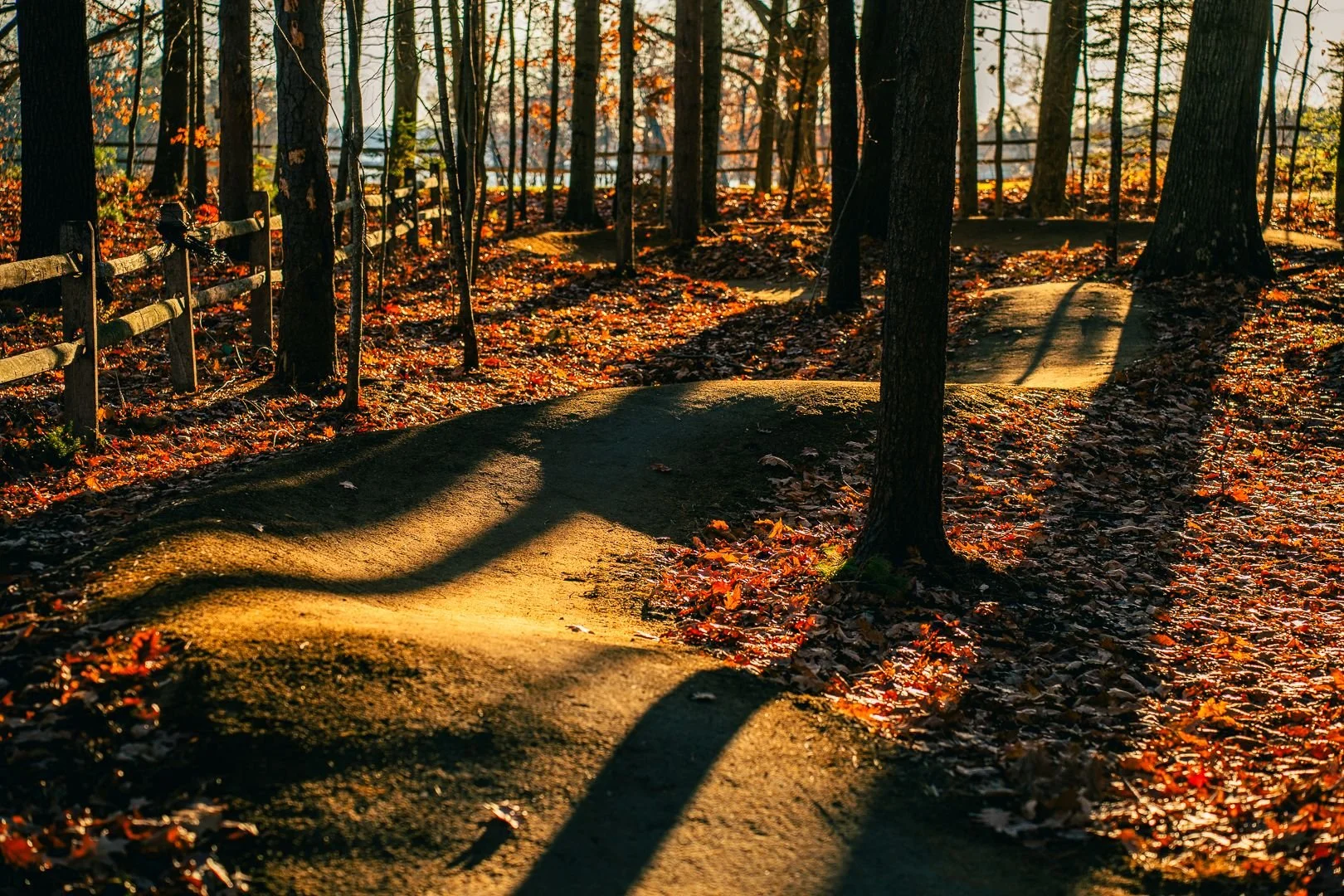
Flow features are trail elements designed to generate and maintain momentum through the use of smooth berms, rollers, and transitions. They are a good fit for riders who enjoy fast, rhythmic riding and for trail systems looking to attract a wide audience, including newer riders building confidence.
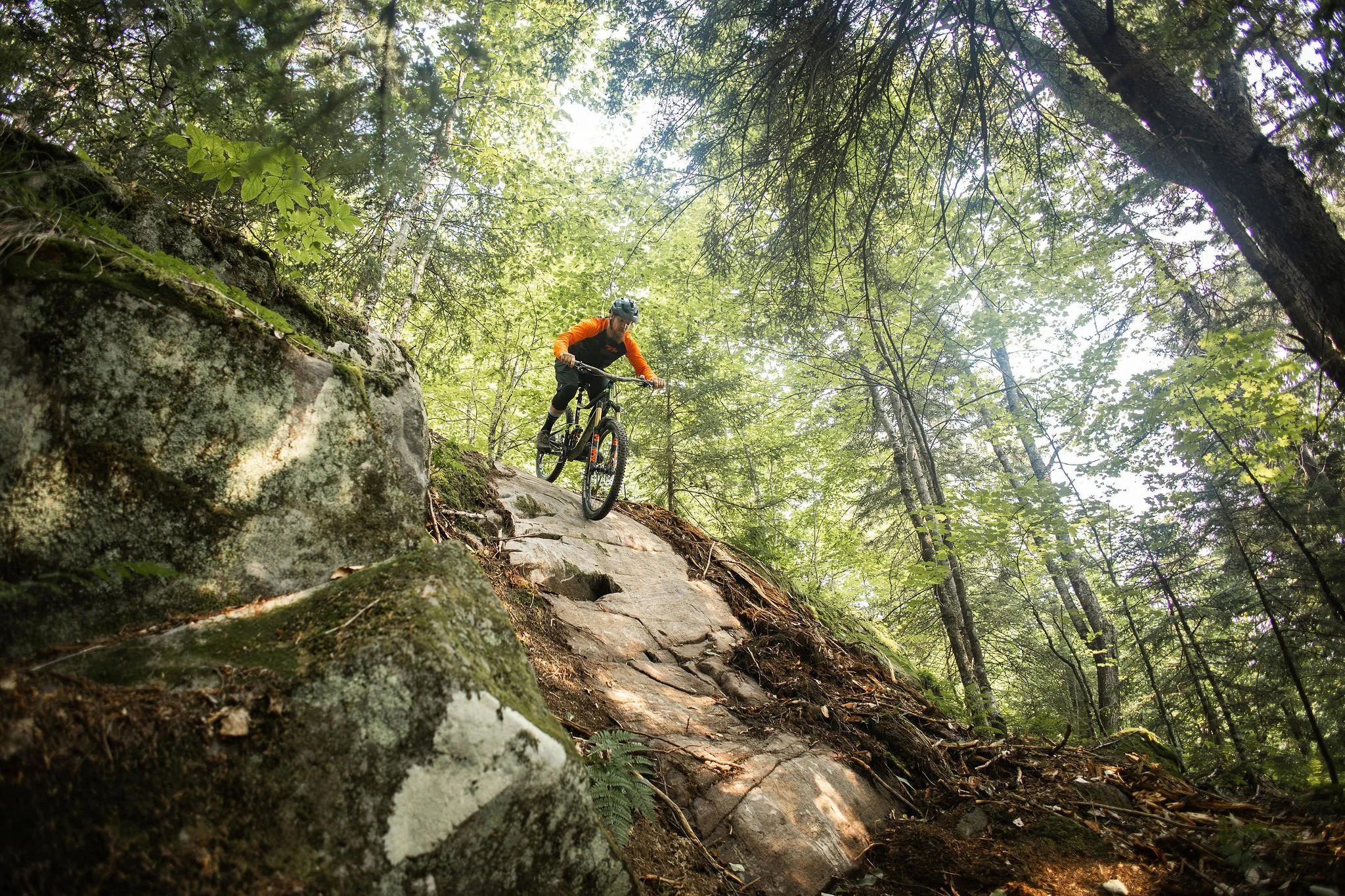
Tech features introduce technical challenge through natural or constructed obstacles such as exposed roots, rock gardens, tight switchbacks, and steep rock rolls. They are best suited for experienced riders and trail systems that want to offer a more demanding and varied riding experience.
Construction Methods
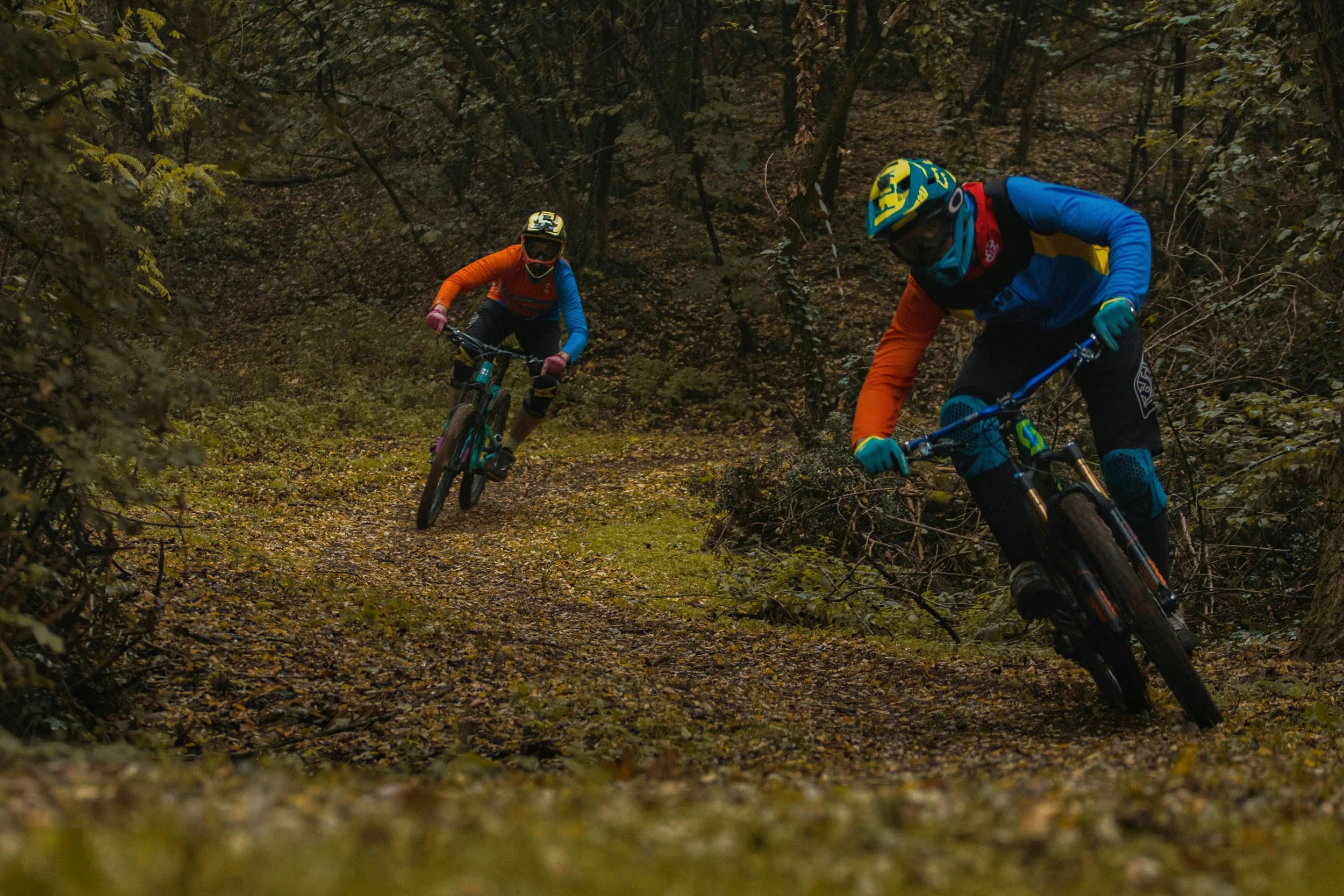
Rake and ride is a minimally invasive construction method where existing soil is cleared and shaped by hand using rakes and similar tools, with no significant earthmoving. It is best suited for low-traffic natural surface trails where preserving the existing landscape and minimizing cost are priorities.

Hand bench construction involves manually cutting a flat trail corridor into a hillside using hand tools, creating a stable tread without the use of machinery. It is a good fit for steep or sensitive terrain where equipment access is limited or where a lighter ecological footprint is required.

Machine-built trails are constructed using excavators or other equipment to efficiently move and shape large volumes of soil, producing consistent and durable trail surfaces. This method is best suited for high-traffic trails, flow-oriented designs, and projects where speed of construction and long-term durability are priorities.
Hiking Trails
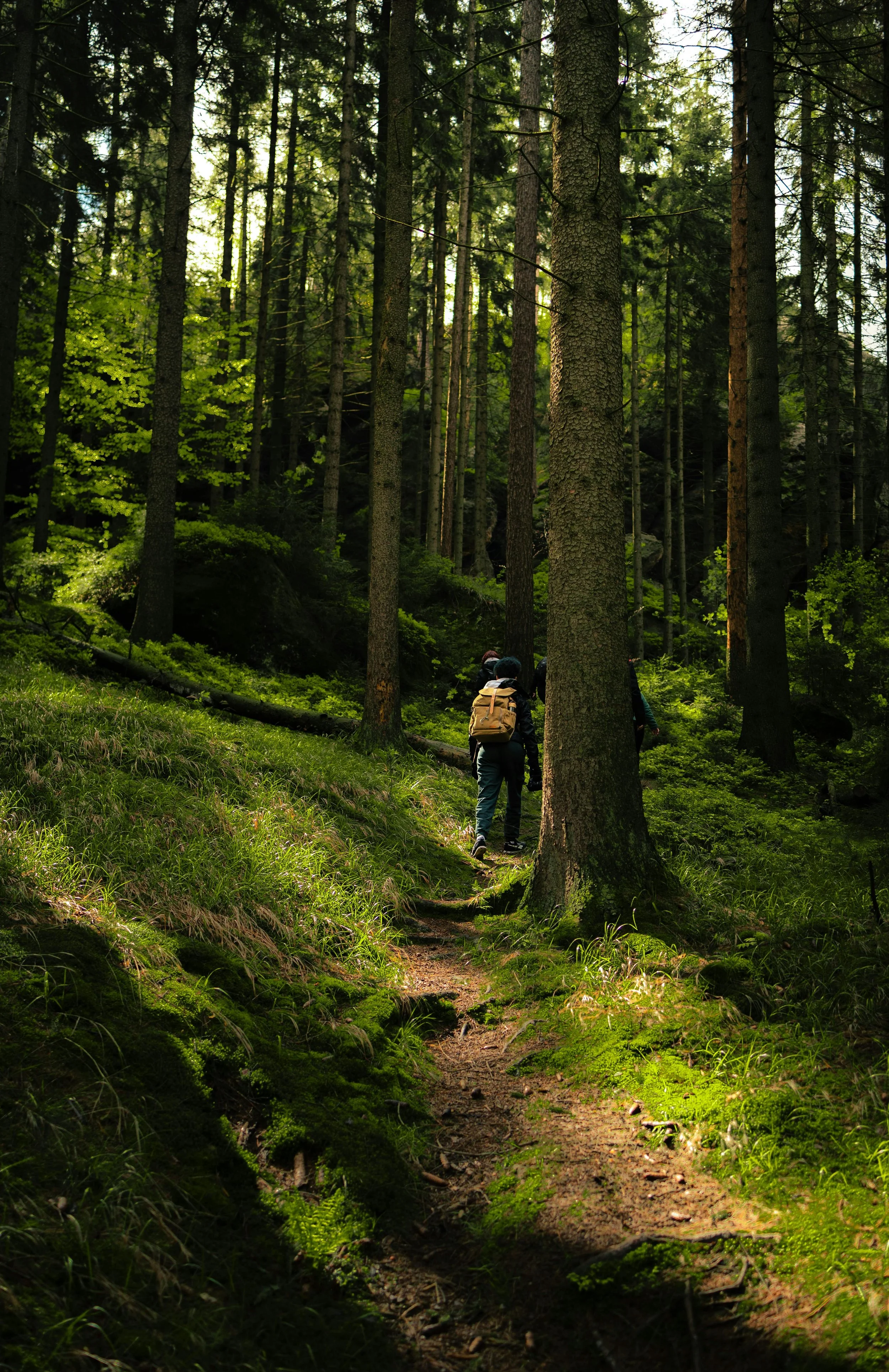
We build hiking trails across the full spectrum of terrain and construction methods, from hand-benched singletrack to machine-built multi-use pathways with proper wet area solutions.
From minimal-impact rake and walk routes to stone dust accessible pathways, we match the construction method to the land, the traffic, and the environment. Every trail is built with durability and stewardship in mind.
Minimal Impact Trails
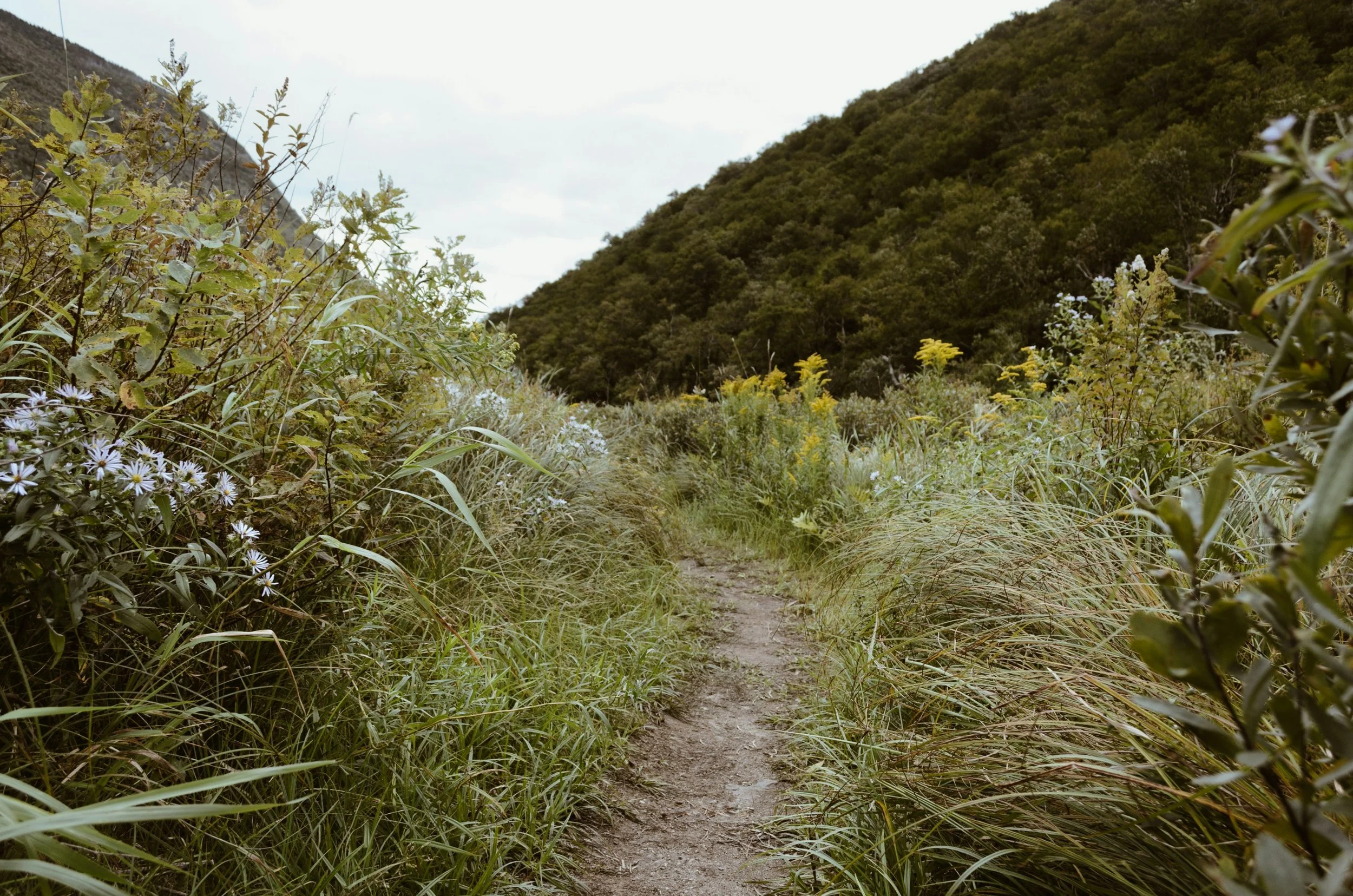
Rake and walk is a minimal-impact construction method where existing vegetation is cleared by hand and the natural ground surface is used as the trail tread with little to no soil disturbance. It is best suited for low-traffic routes through sensitive environments where preserving the natural landscape is the primary concern.
Wet Area Solutions
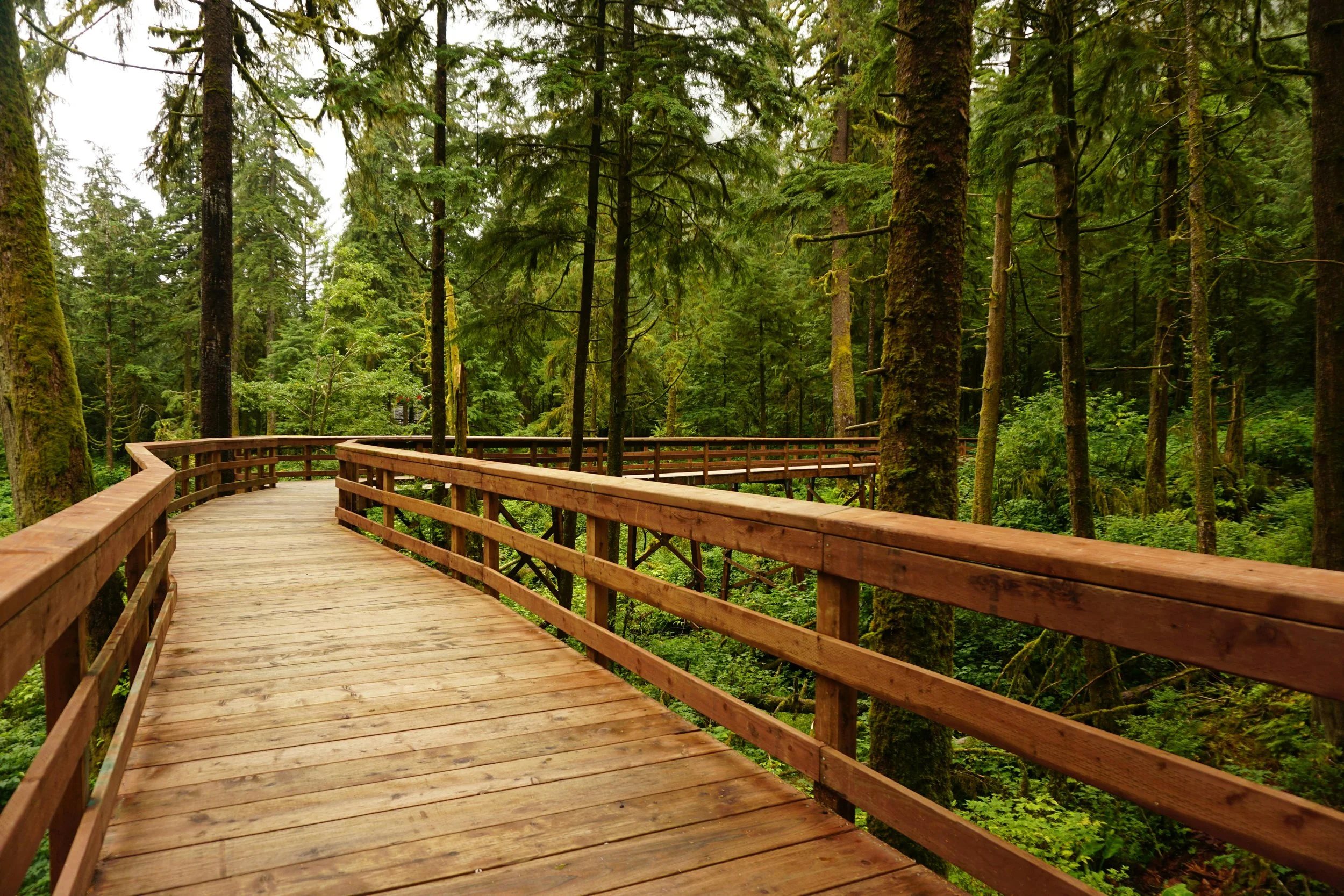
Boardwalks are elevated wooden structures that carry trail traffic above wet, unstable, or ecologically sensitive ground. They are best suited for areas with persistent standing water or fragile wetland vegetation where rerouting the trail is not a practical option.
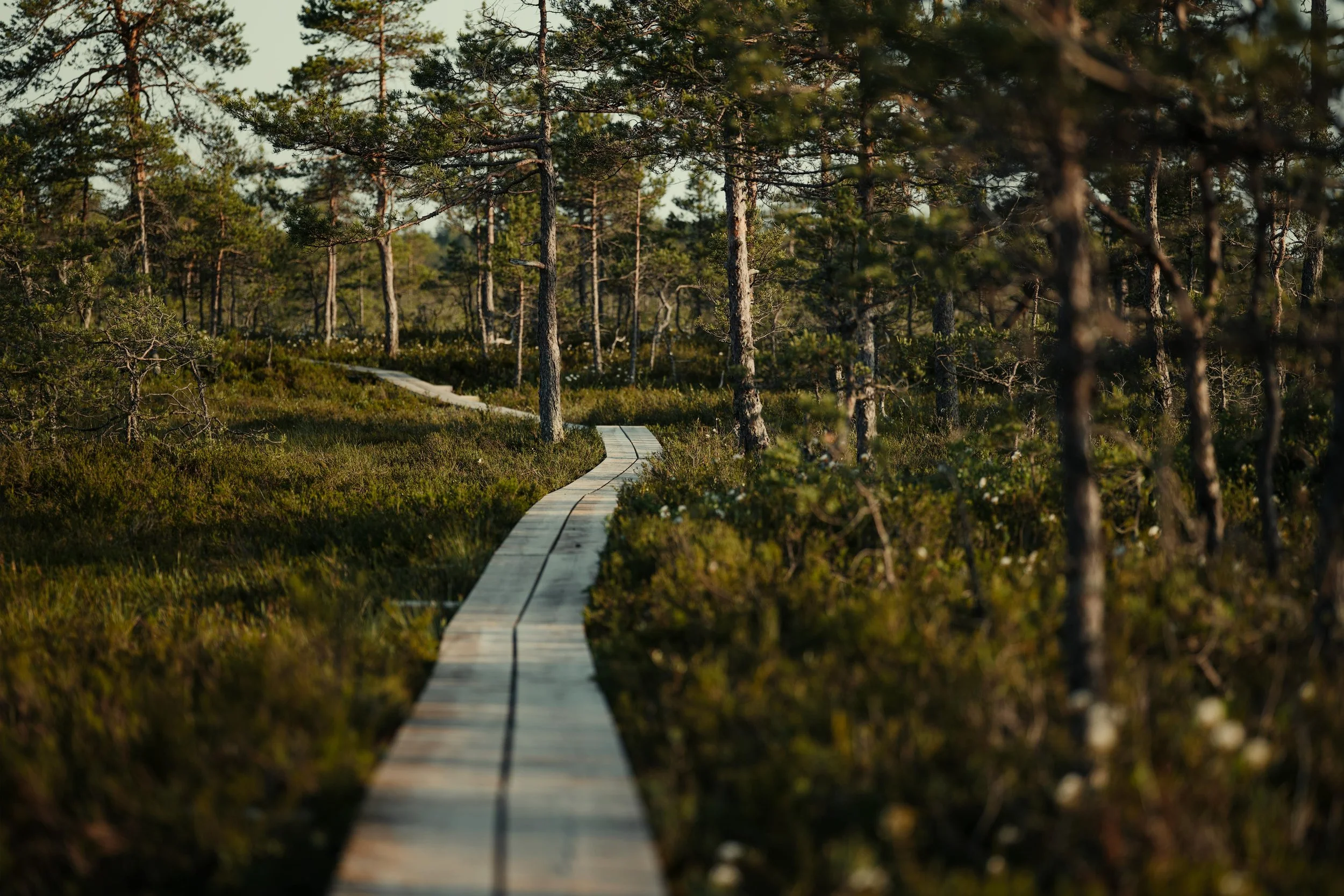
Bog bridges are low-profile wooden planks laid flat on the ground surface to provide a stable footing across soft or saturated soil. They are a good fit for intermittently wet areas where full elevation is not necessary but surface stability and resource protection are still needed.
Hand-built Trails

Hand benched tread is constructed by manually cutting a level corridor into a hillside using hand tools, creating a stable walking surface without the use of machinery. It is a good fit for steep or ecologically sensitive terrain where equipment access is limited and a lower-impact approach is required.
Machine Built Trails
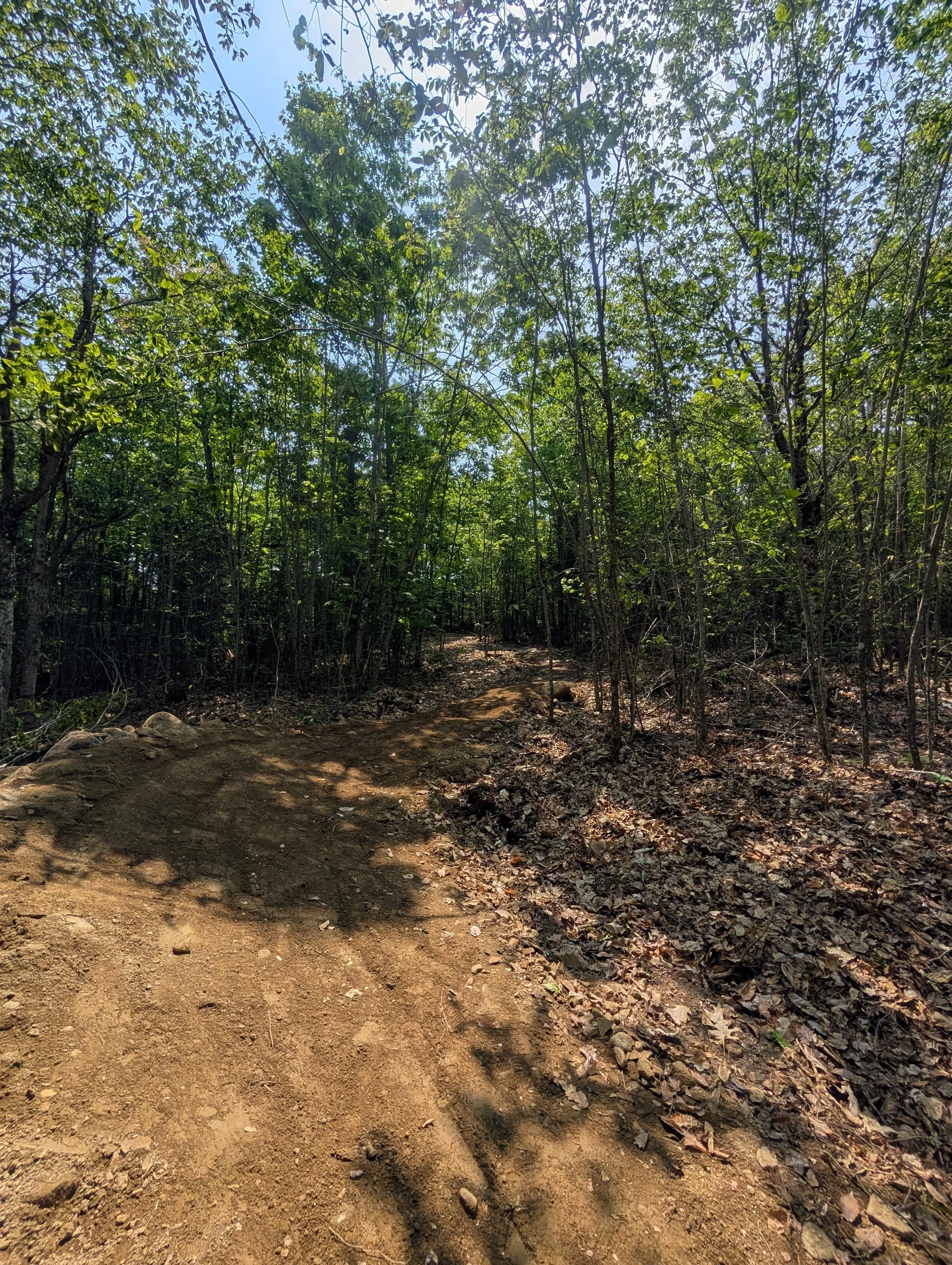
Bench cut is a machine-assisted method where an excavator cuts a level tread into sloped terrain, producing a durable and well-drained trail surface efficiently. It is best suited for high-use trails on hillside terrain where long-term durability and construction speed are priorities.
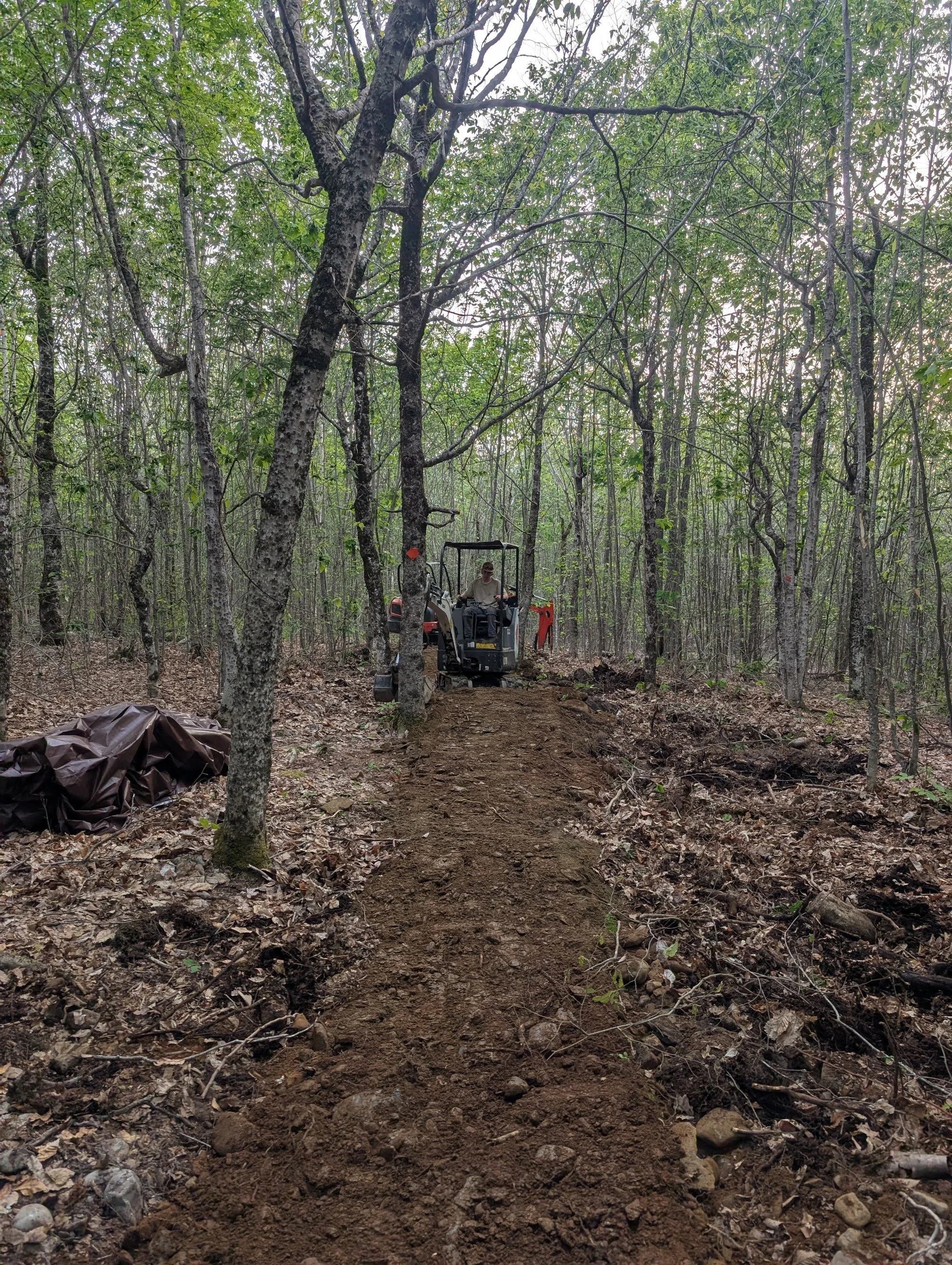
Lift and tilt is a machine-built technique where soil is excavated and repositioned to create an outsloped trail surface that sheds water naturally. It works well on moderately sloped terrain where drainage is a concern and a sustainable, low-maintenance trail surface is the goal.
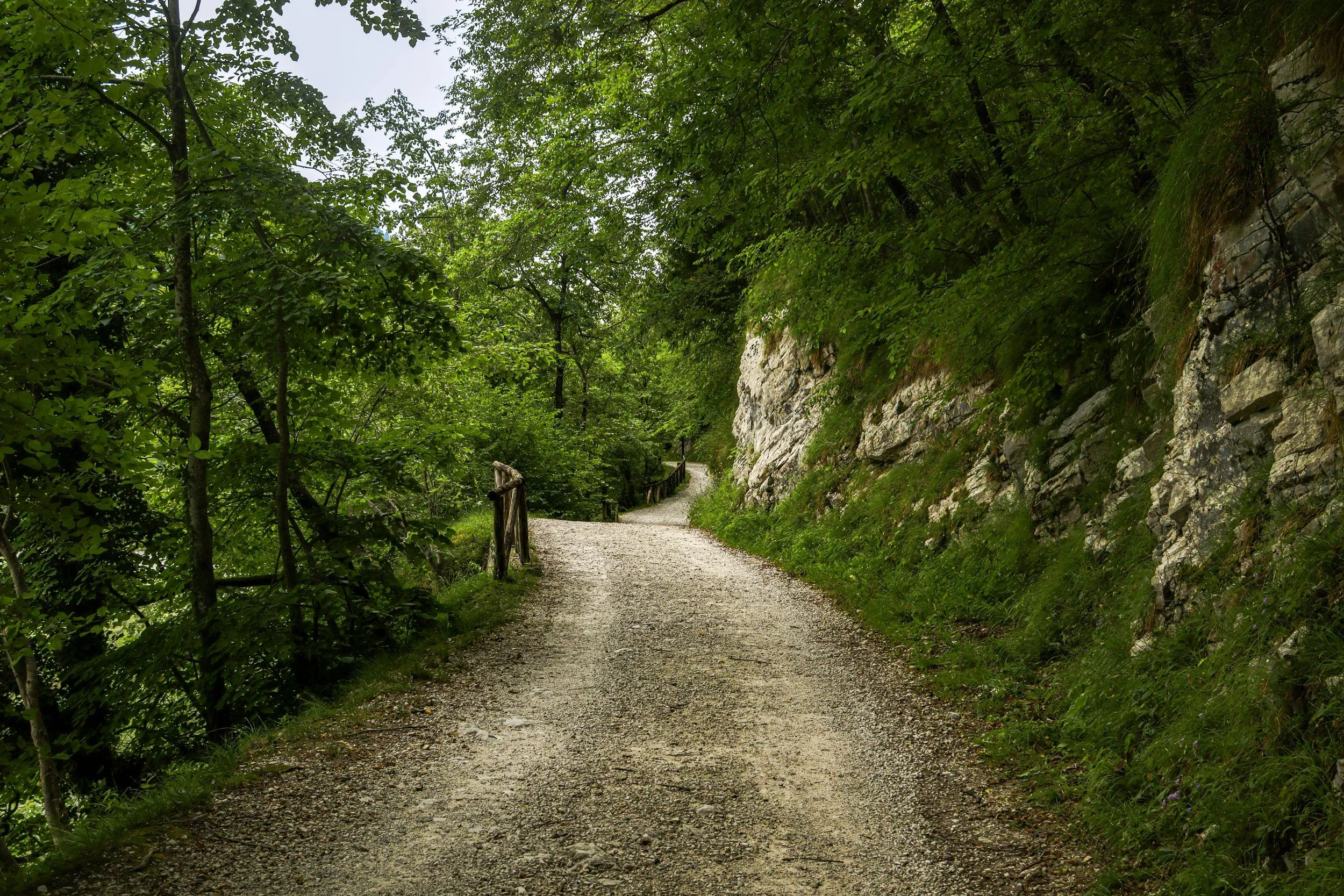
Stone dust is a compacted aggregate surface applied to a prepared trail base, creating a firm, all-weather tread that holds up well under heavy foot traffic. It is a good fit for high-use trails, accessible pathways, and locations where a more formal surface is appropriate.
How to choose the right trail.
Choosing the right trail type comes down to three things: who will use it, how often, and what the land can support.
Here are few questions worth thinking through before any project gets off the ground.
01
What types of users will the trail accommodate?
beginners, experienced riders, hikers, or a mix? Will the trail be used by a small local community or experience higher traffic volumes from tourism.
02
How much elevation change does the site have?
Are there steep sections, areas with long descents, rolling hills? Where does water naturally flow?
03
Are there regulatory constraints on the land?
Wetland buffers, conservation easement restrictions, and permitted use designations all define what can be built and where before a single design decision is made.
Reach out to us to schedule a site visit
The best way to pull it all together is to walk the land with someone who knows what to look for. We'll help you figure out exactly what your project needs.